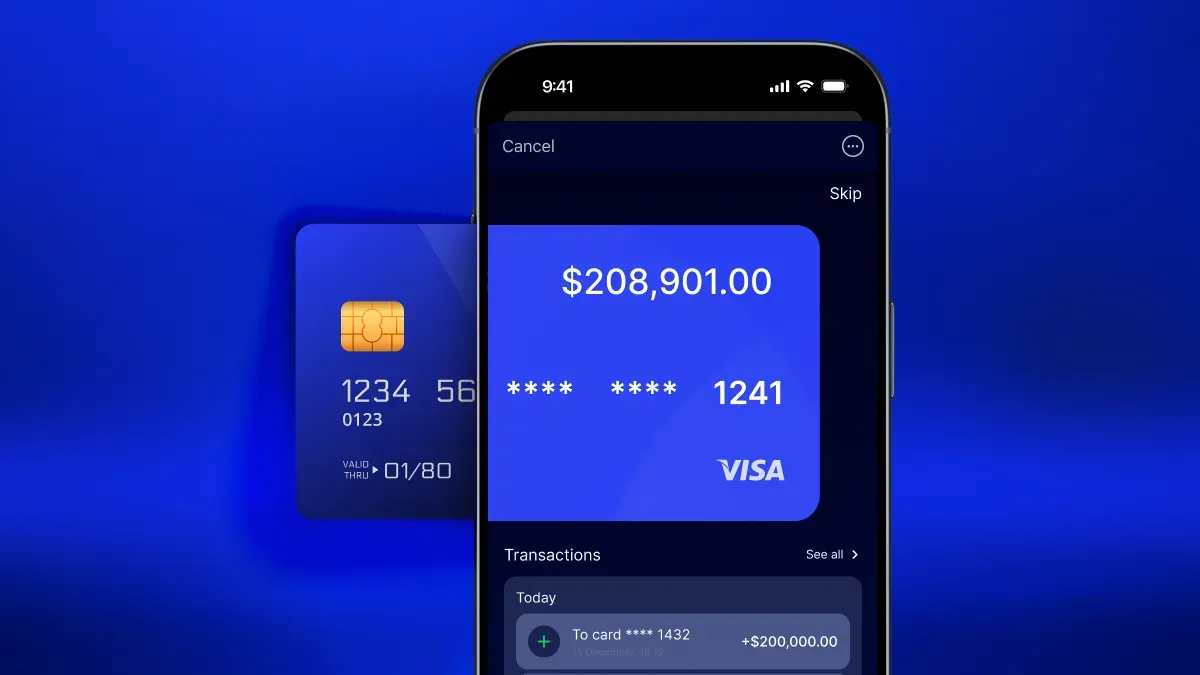


A card issuing platform is the software layer that lets a company create and operate payment cards without building payment infrastructure from scratch. It handles card creation, authorisation decisioning, spend controls, ledgers, and the APIs your product builds against — sitting between your application and the licensed institution that legally issues the cards.
The category has matured to the point where launching cards is no longer an infrastructure problem so much as a procurement one. The difficulty has shifted to choosing correctly, because switching platforms after launch means reissuing every card to every customer. If you need the fundamentals first, see what card issuing means and how a card program gets launched.
What a Card Issuing Platform Does
The platform sits in the middle of a stack with clearly divided responsibilities:
Layer
Owned By
Function
Product and brand
You
Customer relationship, interface, business logic
Issuing platform
Vendor
Card lifecycle, authorisation, controls, ledger, APIs
Issuing licence
Bank or EMI
Regulatory permission, settlement, compliance accountability
Card network
Visa / Mastercard
Rails, scheme rules, BIN allocation, routing
Some vendors provide only the middle layer and expect you to bring your own sponsoring bank. Others bundle the licence, which is faster to launch but ties the two decisions together. Which model suits you is one of the first questions to settle.
Core Capabilities
- Card lifecycle management. Create, activate, freeze, replace, and terminate cards — virtual and physical — through an API.
- Authorisation decisioning. Real-time approve or decline against balance, controls, and fraud scoring, within the network timeout.
- Spend controls. Limits, merchant locking, category rules, validity windows, and geographic restrictions enforced at authorisation.
- Ledger and funding. Balance management, holds, settlement posting, and reconciliation against issuer files.
- Event delivery. Webhooks for authorisation, settlement, reversal, decline, and dispute events.
- Tokenisation. Provisioning into Apple Pay and Google Pay, ideally with push provisioning from your own app.
- Secure card display. Hosted components or SDKs that show card details without bringing your systems into PCI DSS scope.
- Dispute handling. Workflow for raising chargebacks and submitting evidence within scheme timeframes.
- Compliance tooling. KYC orchestration, sanctions screening, and transaction monitoring.
Build Versus Buy
Building your own issuing infrastructure means obtaining a licence, securing principal network membership, developing authorisation systems that meet scheme certification, and operating settlement and reconciliation. It delivers full interchange economics and complete product control.
It also means a timeline measured in years rather than months, substantial regulatory capital, a permanent compliance function, and an authorisation system whose downtime translates directly into declined cards at checkout.
Factor
Buy a Platform
Build In-House
Time to market
Weeks to months
A year or more
Upfront cost
Integration and setup fees
Regulatory capital and engineering
Ongoing economics
Vendor takes a share
Full interchange retained
Regulatory burden
Largely delegated
Entirely yours
Product flexibility
Bounded by vendor roadmap
Unconstrained
Operational risk
Vendor uptime
Your uptime
Sensible when
Launching or scaling to moderate volume
Very high volume, cards are the core business
The break-even is usually a function of volume. Below it, vendor fees are cheaper than a compliance department. Above it, the interchange share you surrender exceeds what building would cost. Most companies buy first and revisit the question only once the numbers clearly justify the change.
Evaluation Criteria
Licensing and Geographic Coverage
The first filter and the one that eliminates most candidates. Card issuing is licensed territorially, so a platform that cannot issue to residents of your target markets is unusable regardless of how good the API is. Ask for the actual eligible country list, in writing, and check it against where your customers live rather than where you are incorporated.
Where the platform bundles a licence, confirm which entity holds it and in which jurisdictions. Where it does not, ask which sponsors it is already integrated with — an existing integration saves months compared with introducing a new bank relationship.
Risk Appetite
Every issuer maintains prohibited and restricted categories. Crypto, gaming, adult content, high-risk merchant categories, and certain geographies are commonly excluded. A platform may be technically capable of supporting your use case while its sponsoring bank refuses to underwrite it.
Establish this in the first conversation rather than after a technical evaluation. Ask directly whether your business model has been approved before, and whether any existing customers operate in your category.
Product Coverage
- Virtual cards, physical cards, or both
- Debit, prepaid, and credit-backed products
- Single-use and merchant-locked issuance
- Multi-currency balances and settlement currencies
- Consumer versus business cardholders, including corporate onboarding
- Just-in-time funding, if your balances live in your own ledger
API and Developer Experience
You will live in this API for years. Evaluate documentation quality, sandbox fidelity, SDK availability, webhook reliability and retry behaviour, idempotency support, and rate limits. Build a working prototype in the sandbox before signing — an afternoon of integration reveals more than any amount of sales material.
Pay particular attention to how the sandbox simulates authorisations, declines, and disputes. A sandbox that cannot reproduce a partial reversal or a chargeback is a sandbox you will outgrow immediately.
Reliability
Authorisation is a hard real-time path. If the platform is slow or unavailable, cards decline at the point of sale and your customers experience it directly. Ask for historical uptime on the authorisation service specifically, not the aggregate dashboard figure, along with latency percentiles and the incident communication process.
Commercial Terms
- Setup and integration fees. One-off, sometimes substantial.
- Platform minimums. Monthly floors that make small programmes disproportionately expensive.
- Per-card fees. Critical if your model issues cards per transaction or per project rather than per user.
- Transaction pricing. Fixed, percentage, or both.
- Interchange share. How much of the interchange revenue reaches you, and how it varies by region and card type.
- Foreign exchange margin. Often the largest real cost in international programmes and frequently buried in the schedule.
- Contract length and exit terms. What happens to your cards and data if you leave.
Compliance Support
Clarify precisely which obligations sit with you and which with the platform or sponsor. KYC, sanctions screening, transaction monitoring, suspicious activity reporting, and dispute resolution all have to sit somewhere, and assumptions here surface expensively during onboarding.
Migration Risk
Switching issuing platforms is genuinely difficult. Card numbers belong to the issuer's BIN ranges, so changing sponsor means every cardholder receives a new number and every stored billing profile breaks. Physical cards must be reissued and posted.
This asymmetry is why the initial choice deserves more scrutiny than the switching cost implies. Practical hedges include confirming data export rights in the contract, avoiding deep coupling to proprietary vendor concepts where a generic abstraction would do, and preferring platforms that support multiple sponsors so a sponsor change does not force a full platform change.
Evaluation Process
- Define requirements first. Markets, card types, volumes, funding model, control granularity, and compliance division of labour — before speaking to vendors.
- Filter on licensing and risk appetite. These eliminate most candidates and cost nothing to check.
- Build in the sandbox. A working prototype with two or three finalists, exercising authorisations, declines, and webhooks.
- Model the economics. Run your actual projected volumes through each pricing schedule, including FX and per-card fees.
- Reference customers. Ask for customers in your category and geography, and ask them about support responsiveness and incident handling.
- Negotiate exit terms. Data portability and termination provisions matter more than headline pricing.
Platforms for Crypto and Fintech Programmes
Platforms serving crypto-linked programmes form a distinct segment, because the constraint is commercial rather than technical. Conversion at authorisation is a solved engineering problem; finding a sponsoring institution willing to underwrite the category is the actual bottleneck.
Providers in this space bundle sponsorship, processing, and compliance tooling so the sponsor question is answered at the point of vendor selection, the same way issuing branded crypto debit cards works in practice. SimplifyLabs operates a white-label programme of this type, aimed at exchanges, OTC desks, and wallet providers adding card functionality to an existing balance product.
Frequently Asked Questions
What is a card issuing platform?
The software layer that enables a company to create and operate payment cards — handling card lifecycle, authorisation, spend controls, ledgers, and APIs — while a licensed institution provides the legal issuing capability.
Do I need my own licence to use one?
Usually not. Most platforms either provide a sponsoring institution or integrate with existing sponsors. You operate as programme manager, owning the product and customer relationship, while the sponsor holds the licence.
How long does it take to launch?
Typically weeks to a few months with a platform that already has a sponsor in place. Due diligence and certification, not engineering, usually dominate the timeline.
What does it cost?
Setup fees, monthly minimums, per-card fees, and per-transaction pricing, offset by an interchange share. Foreign exchange margin is often the largest real cost in international programmes. Model your own projected volumes rather than comparing headline rates.
Can I switch platforms later?
Possible but disruptive. Card numbers belong to the issuer's BIN ranges, so a sponsor change means reissuing every card. Negotiate data portability and exit terms upfront.
Should I build my own issuing infrastructure?
Rarely at the outset. Building requires a licence, network membership, certified authorisation systems, and permanent compliance capability. It makes sense at high volume where the surrendered interchange share exceeds the cost of building.
What is the difference between a platform and an issuer-processor?
Substantially overlapping terms. Issuer-processor emphasises the authorisation and card management engine; platform usually implies a broader package including controls, dashboards, compliance tooling, and sometimes a bundled sponsor.
How do I check whether a platform can serve my market?
Ask for the eligible country list in writing, covering both where cardholders may reside and where cards may be used. Licensing is territorial, and marketing material rarely reflects the actual constraints.